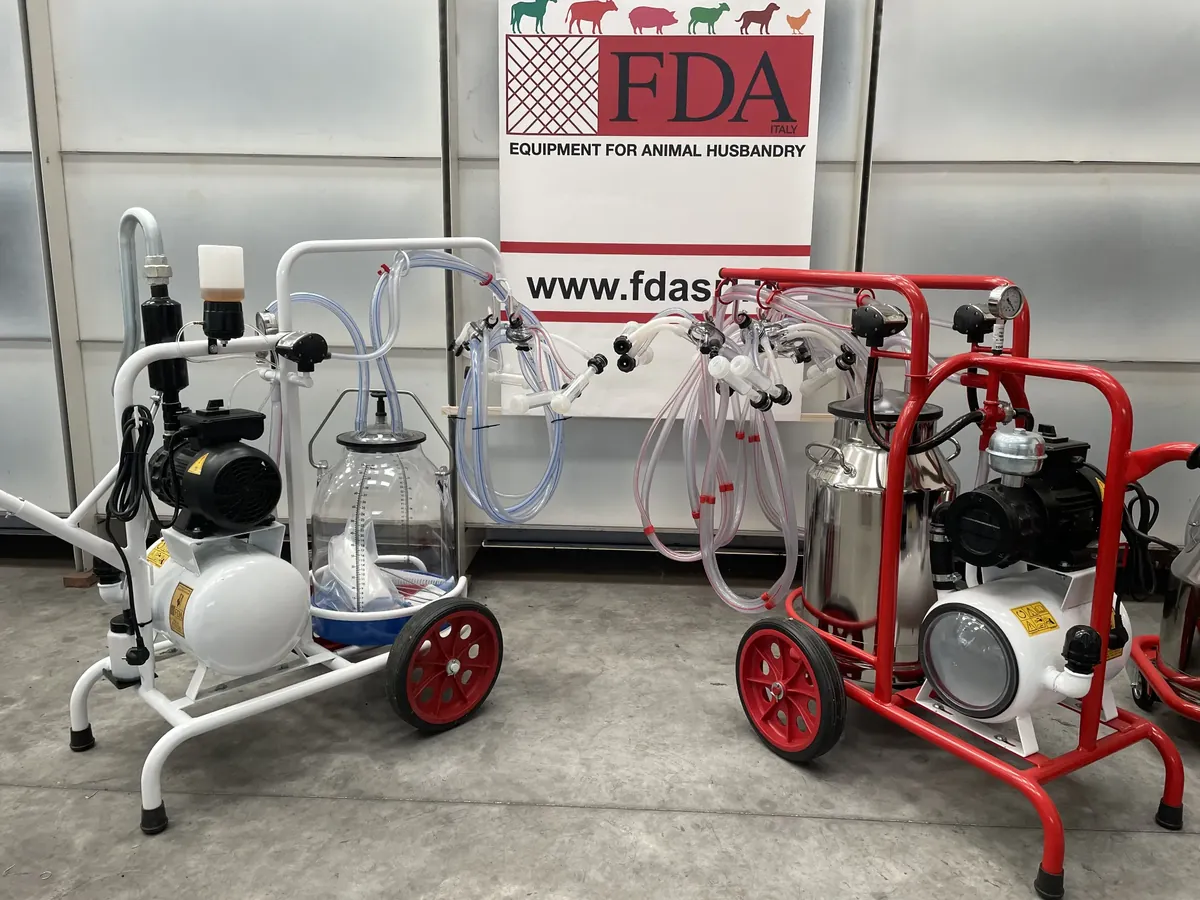
Portable milking machines are essential tools for small-scale breeders and farms seeking efficiency, practicality, and quality in milking.
One of the most important aspects to consider is the type of vacuum motor:
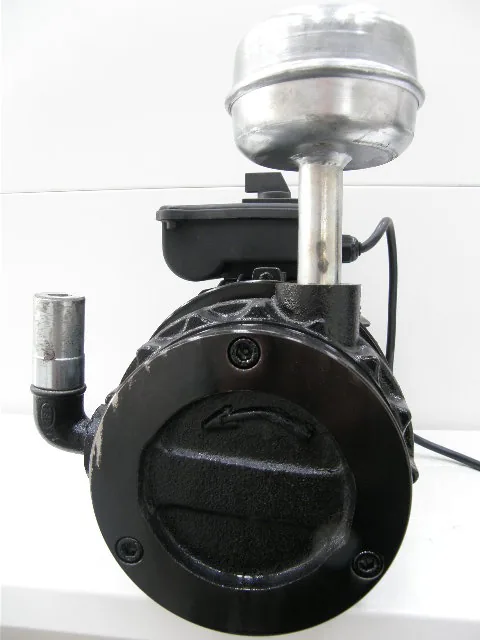
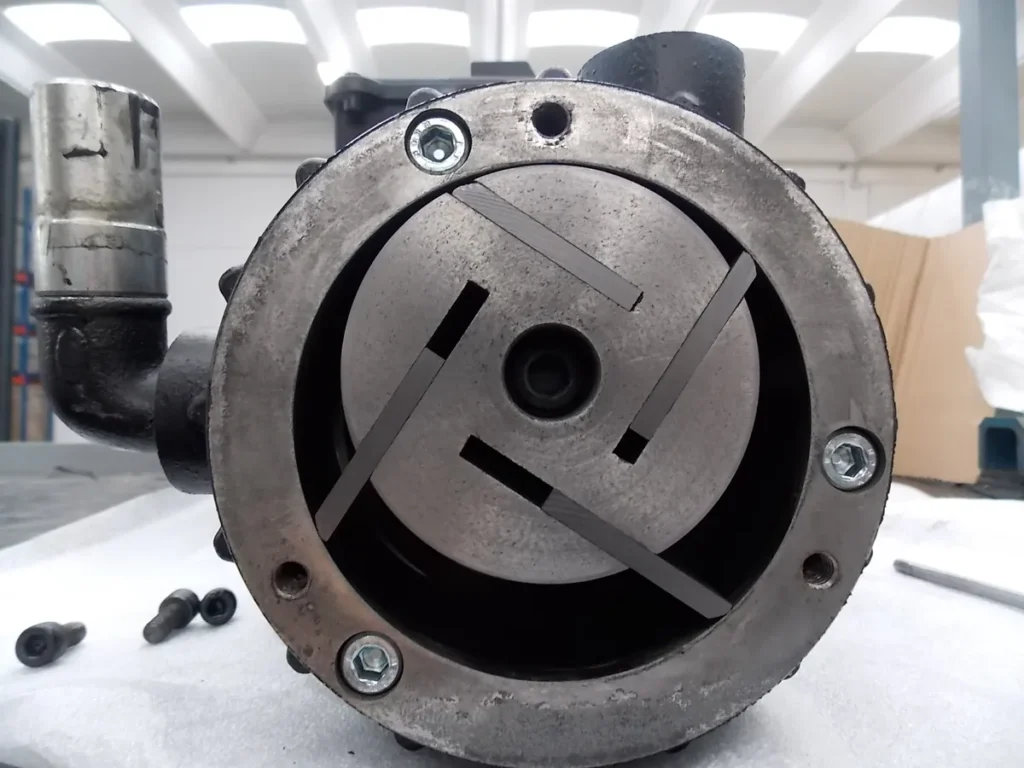
- dry, with graphite vanes;
- oil-bath, with separate tanks.
In this article, we analyze the characteristics of both solutions, without favoring one in particular, to help you choose the one best suited to your needs.
1. Dry vacuum motor (graphite vanes)
Operation: uses self-lubricating graphite vanes, without oil.
Advantages
- Lower maintenance related to oil
- Quick start and clean operation
- Lighter and more practical to move
Aspects to consider
The vanes are subject to wear and must be replaced periodically, generally after approximately 60,000 liters of milked milk.
2. Oil-bath vacuum motor (separate tanks)
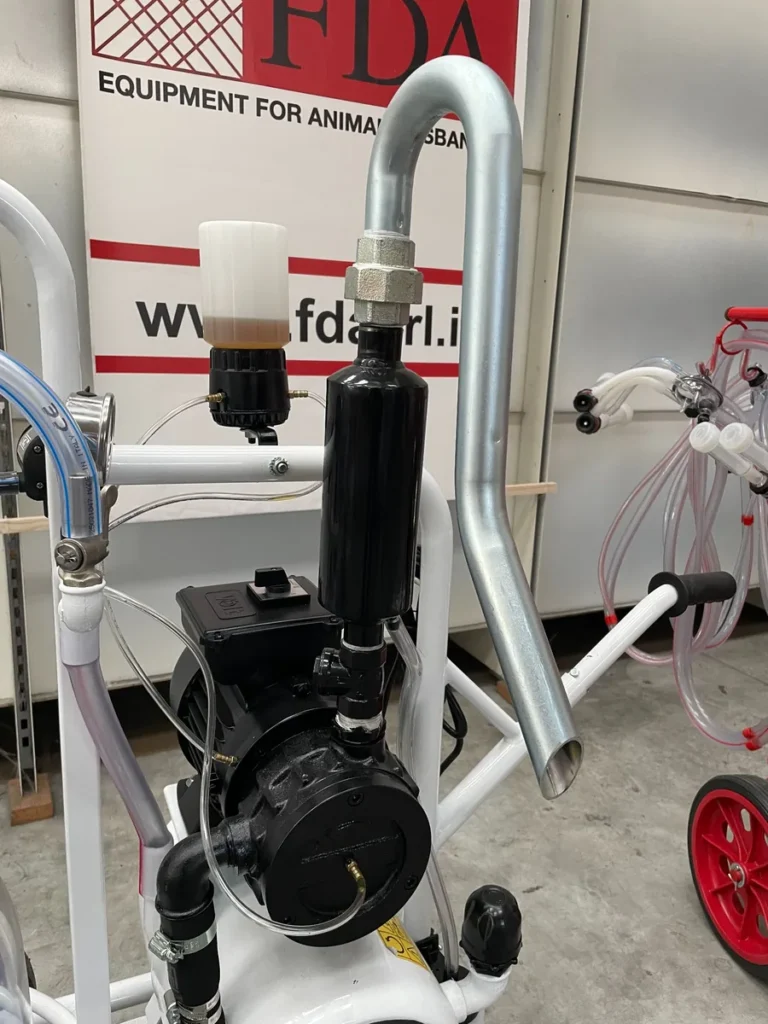
Operation: the vacuum is generated with components lubricated by oil contained in separate tanks.
Why a separate tank system?
- Clean oil is drawn from a reservoir and, after lubrication, is discharged into a waste oil collection tank.
- There is no recirculation: the waste oil does not re-enter the pump.
Advantages of the separate tank system
- Maximum safety for the pump (no return of impurities)
- Simple maintenance: just top up the new oil and empty the waste tank
- Does not require periodic cleaning of the separator and filter
Further advantages of the oil-bath motor
- Long motor life and robustness
- Quieter operation
- Greater vacuum stability even during prolonged use
Aspects to consider
- Requires oil checks and top-ups
- Heavier than the dry version
- Requires periodic maintenance (oil change)
3. Average milking times by species
Indicative times do not change for the same liters/minute of the vacuum pump, but vary based on the animal species and the amount of milk produced per head.
| Species | Average flow (L/min/head) | Milk per head (L) | Average time |
|---|---|---|---|
| Cattle (dairy cows) | 1.5 – 2.5 | 15 – 20 | 5 – 7 minutes |
| Goats | 0.5 – 1.0 | 1.5 – 2.5 | 2 – 4 minutes |
| Sheep | 0.3 – 0.6 | 0.5 – 1.5 | 1.5 – 3 minutes |
4. Conclusion
Both technologies have strengths and aspects to evaluate:
- Those looking for lightness and practicality may prefer the dry motor.
- Those desiring quiet operation and greater durability over time may opt for the oil-bath motor.
The choice depends mainly on the type of use, the frequency of milking, and maintenance preferences.
In any case, both solutions offer reliability and quality in milking, making FDA portable milking machines valuable and versatile tools.
FDA Technical Assistance and Support
FDA provides a professional and always available customer service, ready to provide:
- technical support,
- consultancy in selection,
- rapid responses to breeders’ needs.
Discover our range of milking machines at the following link: CLICK HERE
Where to buy
🔹 Milking machines with dry motor
Available directly on our e-commerce:
👉 Go to trolley-mounted milking machines
🔹 Milking machines with oil-bath motor
Always available and ready for delivery.
For information, quotes, or orders:
📧 info@fdasrl.it